From Vacant to Vibrant: How to Evaluate a Distressed or Abandoned Hotel
How to assess a closed or struggling hotel before you buy: brand and PIP status, building condition, permits and accessibility, exit options and financing.
Updated & fact-checked Figures are linked to their sources at the end of the article.
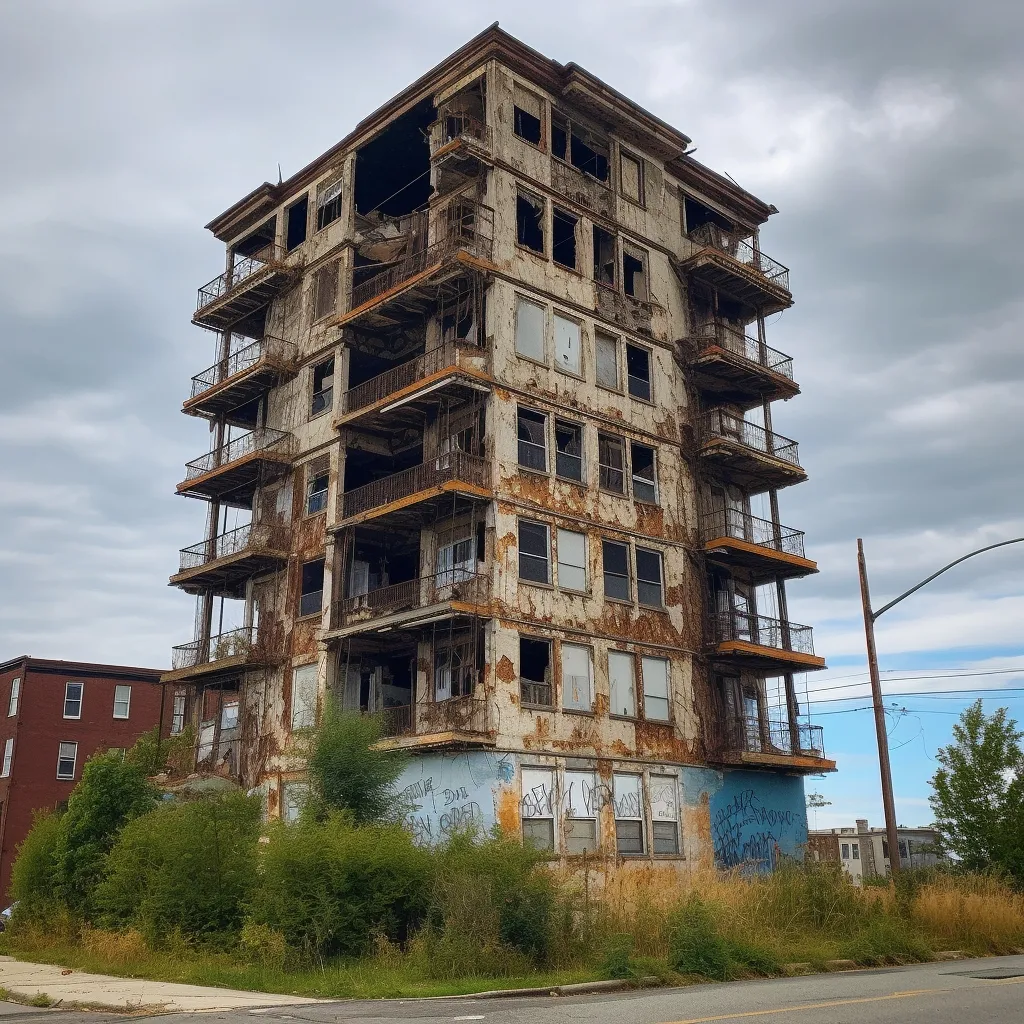
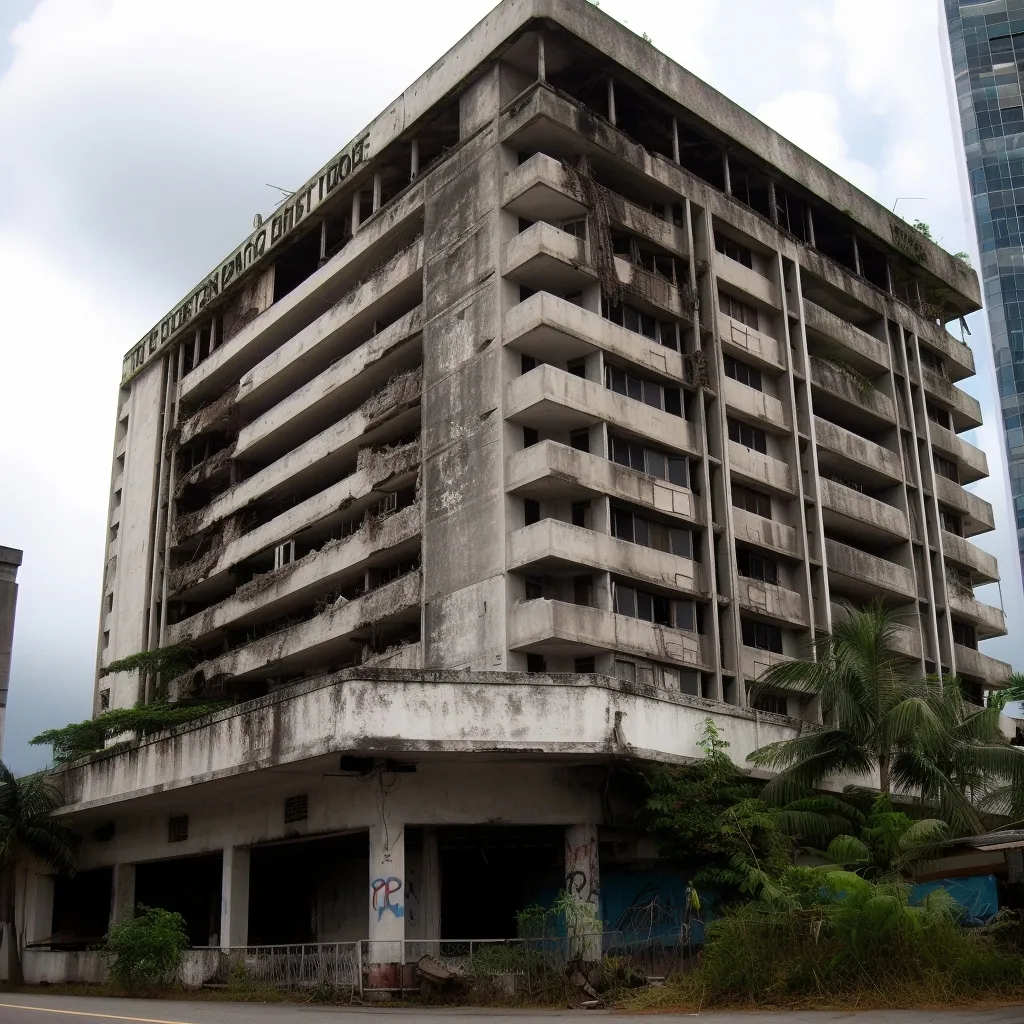
A distressed hotel is one that is losing money, has fallen behind on its mortgage or its brand standards, or has closed altogether. Some are sold by owners who have run out of capital for repairs; others come to market through a lender, a receiver or a court process. The price can look low next to replacement cost, but a hotel is an operating business as well as a building, and both halves have to work after you buy it.
This guide is for buyers considering a closed or struggling hotel. It covers what to check about the brand, the building, the permits and the exit, and how financing usually fits. It is general information, not legal, tax or investment advice.
Why the hotel is distressed matters most
Start by finding out why the hotel failed, because the reason decides whether new money can fix it. A hotel in a healthy market that was starved of capital is a different proposition from one in a market where demand has gone away.
Operators measure that demand with three figures. Occupancy is rooms sold divided by rooms available; average daily rate (ADR) is room revenue divided by rooms sold; and revenue per available room (RevPAR) is ADR multiplied by occupancy.[1] Ask for at least three years of monthly figures for the hotel, and compare them with nearby competitors if you can get them. A hotel whose RevPAR fell while its competitors held steady points to a property or management problem. A whole market falling together points to a demand problem that a renovation will not solve.
Questions to answer before you make an offer
Who is selling, and under what authority?
An owner, a lender that has taken the property back, or a court-appointed receiver. Each sells on different terms, and a receiver or lender usually knows little about the building.
Is the hotel still flagged?
If it operates under a brand, find out whether the franchise agreement can be transferred, what the brand will require of a new owner, and whether the brand has already served a default notice.
Is there a management agreement?
Management contracts can restrict a sale or carry termination fees. Read them before you assume you can bring in your own operator.
How long has it been closed?
A building that has sat empty may have frozen pipes, water damage, mould, vandalism or stripped equipment, and its permits or licences may have lapsed.
What can the site legally be used for?
Check zoning before you plan any conversion. A change of use usually needs municipal approval and a building permit.
Receivership sales are common for distressed hotels. In Canada, a court can appoint a receiver to take possession of an insolvent owner’s property on a secured creditor’s application under section 243 of the Bankruptcy and Insolvency Act.[12] Expect to buy through a court-approved sale with limited representations about the property, which makes your own due diligence more important, not less.
Brand status and the property improvement plan
Most branded hotels operate under a franchise agreement that sets design and service standards. When a branded hotel changes hands, the buyer is commonly required to sign a new agreement and carry out a property improvement plan (PIP), a list of upgrades the brand requires to bring the hotel up to its current standards. RLJ Lodging Trust, a U.S. hotel REIT, states in its annual report that on acquiring a hotel “we often are required to complete a property improvement plan in order to bring the hotel up to the respective franchisor’s standards”.[1]
The same report sets out the risk on the other side. Failing to meet brand standards can lead the franchisor to cancel the licence or require a costly improvement program, and if a licence is terminated because the owner did not make required improvements, the owner may owe the franchisor a termination payment that varies by brand and hotel.[1] A distressed hotel may already be in that position.
In the U.S., the brand’s Franchise Disclosure Document must include a table (Item 17) that summarizes what counts as a transfer, whether the franchisor must approve it and on what conditions, and whether the franchisor has a right of first refusal.[2] Read that section and the franchise agreement itself, then ask the brand for a written PIP before you firm up your price. The PIP cost, plus the cost of curing any existing default, belongs in your purchase budget.
The building: what to inspect
A closed hotel needs a full building inspection, not a walk-through. Commission engineers to look at the roof, the building envelope, the structure, and the mechanical, electrical, plumbing, elevator and fire-protection systems. Hotels have a lot of plumbing, and a building left unheated can hide burst pipes and water damage behind finishes.
Order an environmental assessment as well. In the U.S., Phase I environmental site assessments generally follow ASTM E1527-21, which is designed to identify “recognized environmental conditions” on a property.[3] In Canada the equivalent is CSA Z768-01, which CSA reaffirmed in 2022.[4] Older hotels also need a hazardous-materials survey before any demolition: Health Canada notes that asbestos was mainly used to insulate and fireproof buildings before 1990, and that fibres are released when such materials are drilled, sanded, broken or removed during renovation.[5]
Permits and accessibility
Renovating a hotel is commercial work. In Halifax, a commercial building permit is required for renovations that change interior or exterior walls (including windows and doors), plumbing or structure, and commercial permits require designs and documents prepared and signed by qualified professionals.[6] In California, the state building code says no building may be altered, repaired, converted or demolished without a permit from the local building official, and requirements vary by city and county.[7]
In the U.S., alterations to a hotel also trigger the Americans with Disabilities Act. Under the 2010 ADA Standards, when guest rooms are altered or added, accessibility requirements apply to those rooms until the hotel has the number of accessible rooms required for new construction. When an alteration affects a primary function area, the path of travel to it must also be made accessible, up to the point where that cost exceeds 20% of the cost of the alteration.[8] Budget for both.
Exit options: what the hotel could become
A distressed hotel can be bought to reopen under the same flag, to reposition under a different brand or as an independent, or to convert to another use. Each path has different costs and approvals.
| Plan | What it involves | Main things to check |
|---|---|---|
| Reopen under the same brand | Transfer or sign a new franchise agreement and complete the PIP | Brand approval, PIP scope and deadline, any existing default |
| Change brand | Exit the current franchise and sign with another brand | Termination payment owed to the old brand; the new brand’s PIP |
| Operate as an independent | Drop the flag and run the hotel under its own name | Loss of the brand’s booking channels and marketing; lender acceptance |
| Convert to housing | Change the use to apartments, supportive or transitional housing | Zoning, change-of-use permit, building code upgrades, unit layout |
| Sell to a public or non-profit buyer | Sell the building to an agency acquiring hotels for housing | Whether a program is open and funding is available |
Public programs have bought hotels and motels for housing in both countries. California’s Homekey program funded the acquisition and rehabilitation of hotels and motels, among other buildings, for permanent or interim housing; it is now closed to applications and has been succeeded by Homekey+.[9] In Canada, CMHC’s Rapid Housing Initiative provided capital contributions for acquiring existing buildings for rehabilitation or conversion to permanent affordable housing; its application window is also closed.[10] Whether a similar program is open when you plan your exit is something to check, not to assume.
Losing the brand has a cost of its own. RLJ notes that if it lost a franchise licence, the value of the hotel “could decline significantly” from the loss of name recognition, marketing support, guest loyalty programs and the brand’s central reservation system.[1]
Financing a distressed hotel
Lenders usually finance a hotel on its cash flow, and a closed or failing hotel has little to show. Expect to put in more equity, to finance the purchase and renovation together on a construction-style basis with funds drawn as work is completed, and to refinance once the hotel has a track record. Lenders will want the PIP, the renovation budget and an operator they accept.
Once a hotel is operating, owners typically set aside part of revenue for furniture and equipment. In RLJ’s leases, for example, the lessee must establish a furniture, fixtures and equipment (FF&E) reserve of up to 5% of gross revenue when the franchise or management agreement or a lender requires it.[1] Build a reserve into your projections even if no one requires it, because the next renovation cycle will come.
U.S. owner-operators can also look at SBA 504 loans, which can fund the purchase, construction or renovation of existing buildings for an operating business.[11] In Canada, buyers generally finance through banks, credit unions and private lenders, and should ask each what it needs to see from a hotel that is not yet trading.
Sources
- RLJ Lodging Trust Annual Report on Form 10-K for the fiscal year ended December 31, 2025 — U.S. Securities and Exchange Commission (EDGAR), February 27, 2026. Checked 2026-10-12.
- 16 CFR 436.5: Disclosure items (Franchise Rule, Item 17) — Electronic Code of Federal Regulations. Checked 2026-10-12.
- E1527 Standard Practice for Environmental Site Assessments: Phase I Environmental Site Assessment Process — ASTM International. Checked 2026-10-12.
- Z768-01 (R2022) Phase I environmental site assessment — CSA Group. Checked 2026-10-12.
- Asbestos and your health — Health Canada. Checked 2026-10-12.
- Additions and Renos to mixed use/commercial buildings — Halifax Regional Municipality. Checked 2026-10-12.
- Do I need a building permit for my project? — Contractors State License Board (California). Checked 2026-10-12.
- 2010 ADA Standards for Accessible Design (28 CFR 36.403 and section 224.1.1) — U.S. Department of Justice (ADA.gov). Checked 2026-10-12.
- Homekey — California Department of Housing and Community Development. Checked 2026-10-12.
- Rapid Housing Initiative — Canada Mortgage and Housing Corporation. Checked 2026-10-12.
- 504 loans — U.S. Small Business Administration. Checked 2026-10-12.
- Bankruptcy and Insolvency Act, section 243 (court may appoint receiver) — Justice Laws Website, Government of Canada. Checked 2026-10-12.